
Caring for kitesurfing equipment: a practical routine

Care for kitesurfing equipment by removing sand and salt as each component's manual directs, drying it fully before storage and checking wear before the next session. Give the bar and safety releases particular attention. The kite canopy, harness, board and wetsuit need different handling, so avoid treating the whole bag as one washable item.
Learn equipment handling with a qualified instructor, and use the manual for your exact model and year. If you are still identifying the pieces, our kitesurfing gear guide explains their jobs.
Start with a place to inspect, rinse and dry
Before riding, find out where equipment can be washed and where it can dry without blocking others. Keep the manual available on your phone, especially if you are borrowing a different bar or changing a component.
Make an inspection part of unpacking:
- Look over the canopy, leading edge, struts and small line connectors at the kite.
- Check the bar, lines and release for visible damage.
- Look at the board, straps and fins.
- Confirm the harness closure and kite connection are in good condition.
Report anything suspect before launching. Cleaning cannot resolve worn lines or a damaged closure. Our kitesurfing safety guide puts these equipment checks into the wider pre-launch routine.
Record damage or unusual behaviour. A photo and the model name help a repair specialist.
Kite canopy: handle gently and pack dry
Choose a clear area and look for shells or other sharp debris before laying the kite down. Avoid dragging its tips while moving it. After landing, use the handling and securing method taught by your instructor.
Keep unnecessary beach exposure short. Sunlight and repeated fluttering can wear the fabric even while nobody is riding. Pack the kite away when you have finished, once it is dry. Duotone's kite care notes emphasise drying, careful storage and inspecting the kite and its line connectors.
Check your model's washing instructions. The Duotone MONO manual, for example, permits freshwater rinsing without requiring a daily canopy wash. It specifies complete drying and keeping water and sand out of the bladders.
After any rinse, allow time to dry in shade. Check folds and panels before rolling. If you have had to pack damp equipment for transport, unpack it for drying as soon as you can.
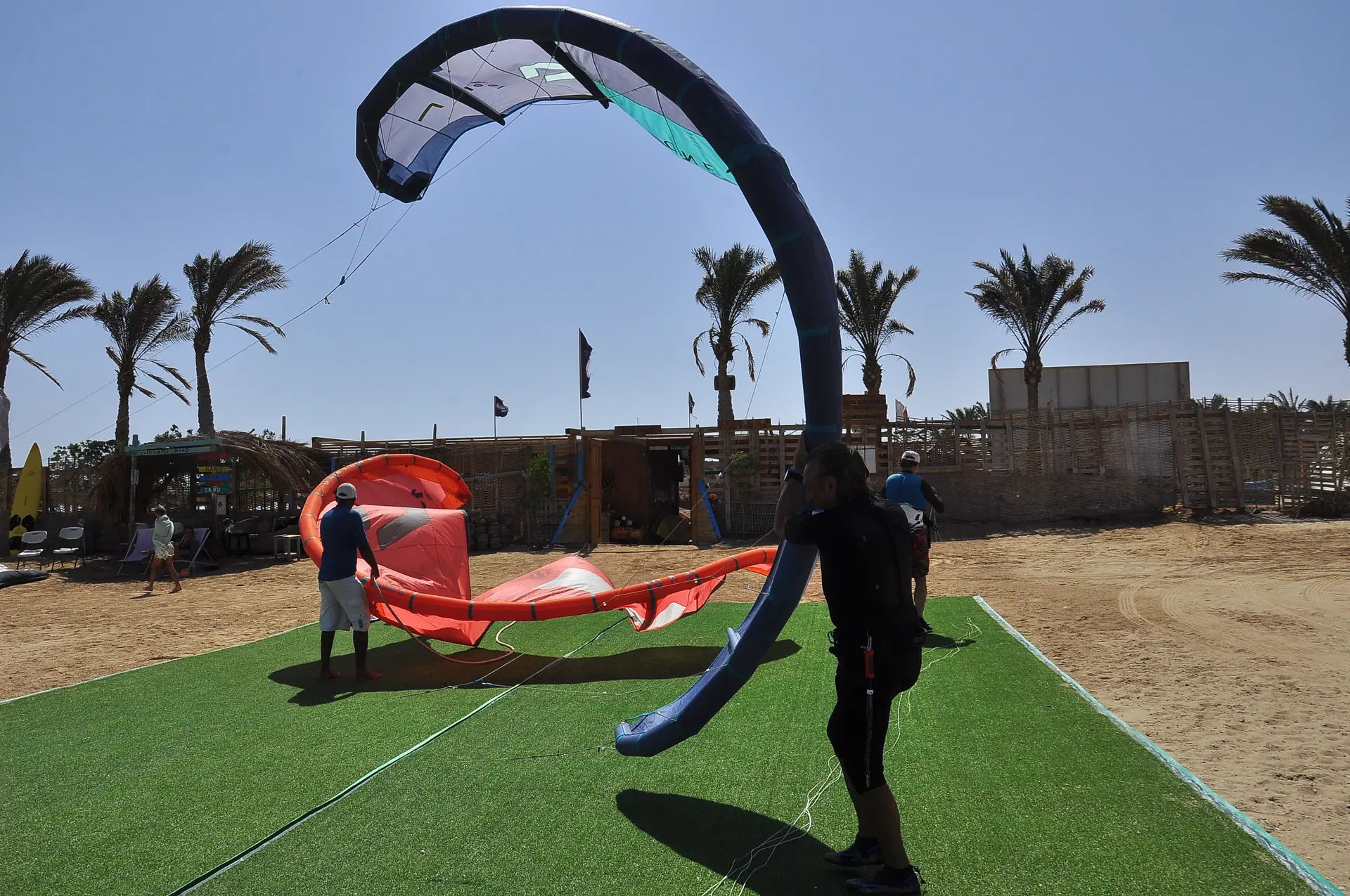
Bar, lines and releases: rinse, inspect, test
Salt and sand deserve attention around moving safety parts. F-ONE's maintenance instructions advise freshwater rinsing of the bar and quick release after use and regular inspection of lines and metal components.
Use your own bar manual for how to open, rinse and reset the release. A mechanism that looks similar may have a different assembly sequence. Learn that sequence with an instructor before you need it on the beach.
While checking unloaded equipment, look for cuts and wear along the lines, leader lines and connections. Examine the parts where ropes pass through guides. If you find damage or unexplained changes, keep that bar out of use pending assessment.
Do not improvise line repairs, substitute rope or add lubricant because a part feels stiff. Ask the maker or a qualified service specialist what is permitted.
Before the next launch, carry out the release test and complete the reassembly checks in a controlled setting, following your instructor and manual. Rinsing yesterday does not confirm that today's system is correctly assembled.
Board, straps and fins: check the small attachments
Rinse the board after use and inspect it in good light. Check its edges and both faces for cracks, damage or layers separating. Duotone's board care guidance recommends professional assessment for significant damage.
Pay attention to the attachments as well. Inspect footstraps for wear and secure fastening; rinse them too. Look at the fins for damage and confirm that they remain securely attached.
Use the board and binding instructions for fasteners and adjustments. Keep the specified tool with your equipment rather than guessing how much force a screw needs.
Store the dry board where it will not be knocked or exposed to prolonged heat and sun. Note new damage before putting it in its bag.
Harness: clean it and check the connection
Rinse the harness and spreader bar as their care instructions direct, then dry them away from direct sun. Look closely at the closure, straps and hook or slider connection. A sliding rope is a wear component and needs inspection before riding.
Check that adjustment still holds and that the front bar engages properly. Stop using any suspect load-bearing part until it has been assessed.
If a previously comfortable harness starts slipping or needs constant readjustment, check its condition and fit. Our harness fitting guide explains the comparison; tightening harder is not a complete diagnosis.
Wetsuit: rinse cold and support it while drying
Rinse your wetsuit with cold fresh water after a session. Avoid hot water and follow the suit's instructions for any cleaner. Handle its panels gently when changing; pulling hard at one small point is unnecessary strain.
Mystic's neoprene care guide advises drying in shade, inside first and then outside, with support at the waist rather than hanging the wet suit by its shoulders.
Give each side time to dry. Check seams and the zip while the suit is open. Store it dry, without tight folds or heavy objects pressing into it.
Use the care labels for boots and other neoprene accessories too. Keep a separate place for damp kit during the journey, then empty it when you arrive. A transport bag does not replace a drying space.
Pump and bags: finish the packing job
Keep sand and water out of the pump. Check the hose and connectors before attaching them to the kite, and follow the kite's inflation instructions.
Duotone's pump guidance recommends storing the shaft down and disconnecting the hose when unused to avoid bending damage.
Empty sand from bags before returning dry equipment to them. Keep small parts together and label anything removed for servicing. Save the relevant model and part names with your maintenance notes.
Before travel or a long break
Allow drying time in your departure plans. Check all the kit before packing so that a damaged component does not become a surprise at your next destination.
Store equipment somewhere dry and away from excessive heat. North's care guidance identifies hot, unventilated cars and prolonged sun exposure as potential damage causes. Carrying a bag does not make those conditions suitable for storage.
Follow the kite's packing instructions and keep hard accessories from pressing against fabric. On arrival, unpack and inspect before riding. Check current airline sports-equipment rules separately; our Marsa Alam packing guide covers the wider holiday list.
Know when to stop and ask for repair advice
A leaking kite, damaged release, torn harness strap or cracked board needs assessment before use. Consult the maker's instructions and a repair specialist about the affected component. Duotone's repair guidance distinguishes owner repairs from work requiring professional help.
Keep photos, the model year and a description of what happened. Ask whether the repair or replacement part is approved, and what checks are required afterwards. Cosmetic tidying does not establish that equipment is ready to ride.
Bringing your own equipment to KiteMood
KiteMood's beach use and storage service includes equipment storage, kite inflating, gear washing and launch and landing assistance. Before travelling, ask how to organise the care of your own equipment during your stay.
If you prefer to leave the kit at home, independent riders who can ride upwind can check the rental options. Equipment is supplied in kitesurfing lessons too.
Contact KiteMood with your dates, level and equipment questions. Arrange the practical details before you pack, then leave time after each session to put the kit away properly.


