
What to pack for a kitesurfing holiday in Marsa Alam

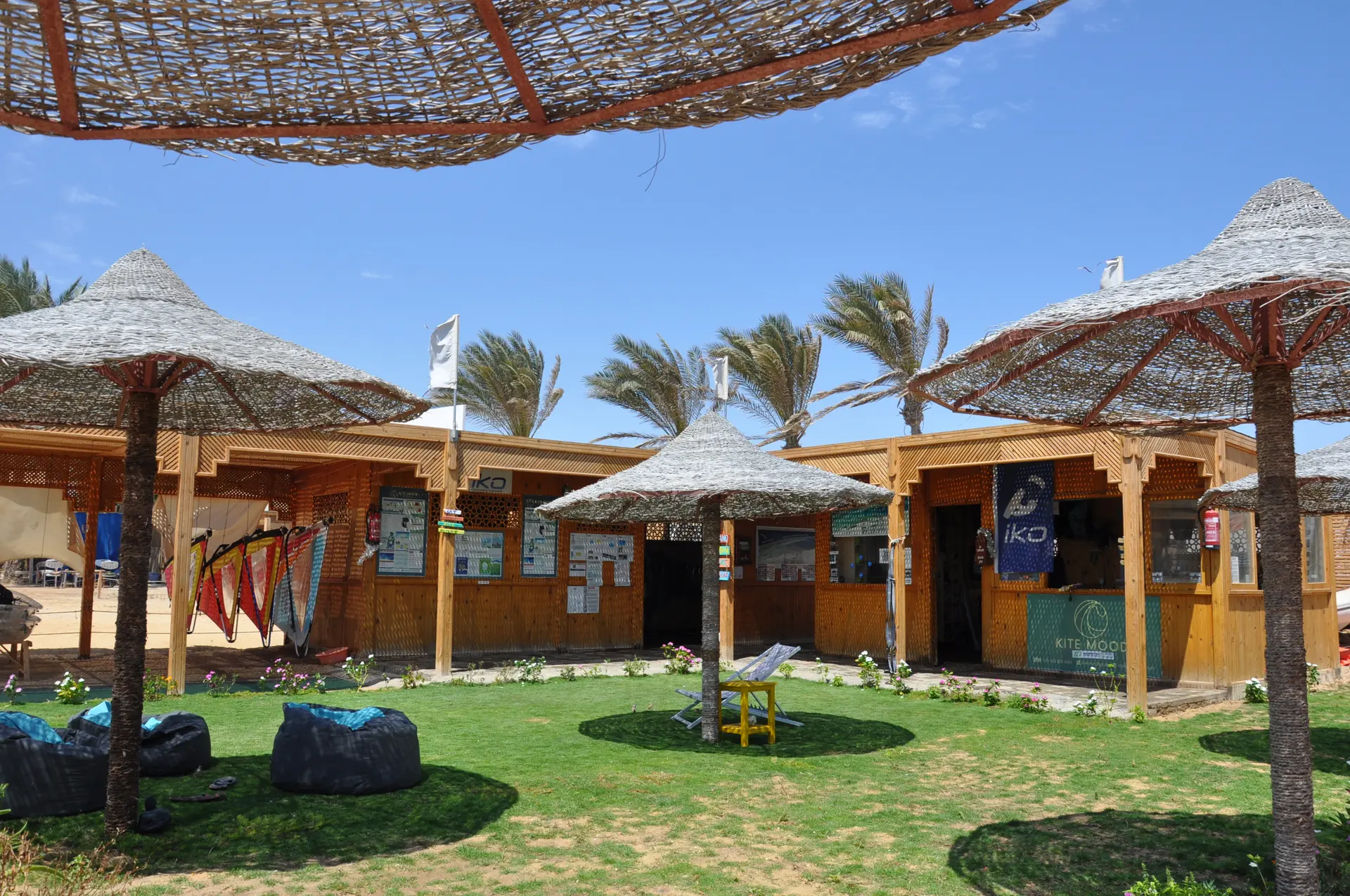
What to pack for a kitesurfing holiday in Marsa Alam depends on whether you take lessons or ride your own kit. For lessons at KiteMood you can pack light, because kites, boards, harnesses, helmets, life vests, wetsuits and other gear are provided, and so is the transfer between the school and the beach. What you need to bring is protection from the sun, something for your feet, a warm layer if you travel between December and February, and the right plug adapter. If you ride your own kit the list is longer, and that has its own section below.
The advice draws on KiteMood's pages, published climate averages for Marsa Alam and NHS sun-safety guidance. Anything that is plain travel sense is worded as a tip. A checklist you can copy sits at the end.
What the school provides, and what is left for you
Start with what can stay at home. The middle column comes from KiteMood's pages; the right-hand column is practical advice.
| Situation | Provided by KiteMood | Left for you |
|---|---|---|
| Lessons | Kites, boards, harnesses, helmets, life vests, wetsuits and other gear, plus the transfer between school and beach | Sun protection, swimwear, a towel, water, warm evening clothes, and shoes unless the school confirms it lends them |
| Supervised rental | Kites in sizes from 6 m² to 15 m², board, harness, vest, helmet, an IKO Assistant Instructor and boat rescue on standby | Shoes, sun protection, and a wetsuit if you want one (not listed, so ask) |
| Unsupervised rental | A full quiver, a kite and bar, or a twintip | Anything else: the page does not list harness, vest, helmet or wetsuit, so ask |
| Your own kit | Storage, kite inflating, washing your kite gear, launch and landing assistance, Wi-Fi, two rescues | Everything you ride with |
Two gaps are worth closing before you book. The pages say "other gear" without itemising it, so ask whether that includes shoes, and they do not define a "full quiver", so ask what is in it. Use the contact page for both. If you are only taking lessons, there is no reason to buy or carry a wetsuit, harness or helmet; the kitesurfing courses page lists what each course covers.
Sun protection comes first
Marsa Alam has a hot desert climate and almost no rain, about 5 mm in a whole year, so leave the raincoat at home. The sun is what you pack for. Published figures put the strongest UV index at 5 in December, rising to 11 or more from April to August. The NHS advises protecting your skin when the UV index is 3 or higher, which on those figures means every month.
Sunscreen
NHS advice is a sunscreen of at least SPF 30 with at least 4-star UVA protection, applied about 30 minutes before you go out and again just before, then reapplied every two hours and after swimming or sweating. Water washes sunscreen off, so a water-resistant product helps but does not end the job. The cooling effect of the water can also stop you noticing that you are burning, and water reflects UV. Bring more than you expect to use: on a windy day the wind typically starts from around 10:00 and builds through the day, so you can be outdoors for most of it.
Cover up
Clothing does much of the work. The NHS suggests a wide-brimmed hat, long sleeves and wraparound sunglasses, which translates into three items for a kite trip:
- A long-sleeved UV top, ideally labelled with a UV protection factor (UPF). It is useful between sessions, on snorkelling days and for anyone who chooses a shorty in summer.
- A wide-brimmed hat for dry land, since the school provides helmets for lessons. Add lip balm with sun protection, because lips burn too.
- Sunglasses, wraparound or with wide arms. For UK buyers the NHS says to look for the CE mark and the British Standard 12312-1:2013 E marking. Ask your instructor before wearing any on the water.
Heat and water
Average daytime highs reach about 35 to 36 °C in July and August, and the school calls those months extremely hot. Carry a refillable bottle, drink regularly and take shade breaks between sessions. If you feel unwell, tell your instructor straight away.
Clothes, wetsuits and shoes by season
These are long-run averages, so any week can be warmer or cooler. Air temperatures come from the Marsa Alam climate record; sea temperature and UV come from a climate-data site, and other sources differ by about a degree. Wind by month is covered in the best time to kitesurf in Marsa Alam.
| Months | Sea | Average daytime high | Average night-time low | What to add |
|---|---|---|---|---|
| December to February | 22 to 24 °C | 24 to 26 °C | 13 to 15 °C | A warm layer and long trousers for evenings. UV peaks at 5 to 7 |
| March to May | 23 to 25 °C | 27 to 33 °C | 16 to 23 °C | The sun strengthens fast: UV peaks at 10 in March, 11 or more from April |
| June to August | 27 to 29 °C | 35 to 36 °C | 24 to 26 °C | The lightest clothes, a hat, a UV top and plenty of water |
| September to November | 26 to 28 °C | 29 to 34 °C | 19 to 24 °C | Still hot early on (UV peaks at 11 in September, 6 in November); a light layer by November |
Wetsuits: long is the advice
KiteMood's advice is a long wetsuit all year, or a long suit or a shorty in summer. For lessons, wear what the school gives you. On sea temperature alone a long suit can look like too much, and the gear guide explains why wind chill may be part of the reason. If you rent kit and want a wetsuit, ask whether it is included, as the rental pages do not say.
Winter evenings
January nights average about 13 °C. The wind usually goes down in the evening, but a damp swimsuit and a breeze after a session can chill you, so pack a dry fleece or light jacket to change into.
Shoes for the lagoon
KiteMood recommends shoes for beginners, because dead coral on a strip of rocky sand can be dangerous if you have to cross it. Travel guides to the Red Sea also warn about sharp coral and sea urchins. Choose closed shoes that stay on in the water and have a sole for rough ground: neoprene boots or reef shoes, not flip-flops. The pages do not say whether the school lends shoes, so ask when you book and bring your own if the answer is no.
Electronics, documents and health basics
Plugs and power
Egypt is listed with plug types C and F at 230 V and 50 Hz. The UK uses type G at the same voltage and frequency, so UK visitors need an adapter but not a voltage converter. If you travel from somewhere with a different standard, read the label on each charger before you plug it in.
- A multi-way lead plus one adapter often beats several adapters.
- Wi-Fi is part of the beach use and storage service for riders with their own kit. The pages say nothing about coverage elsewhere, so download tickets, maps and confirmations before you leave.
Documents and insurance
Entry requirements, passport validity and visas change, so use official sources. UK travellers can check the FCDO's Egypt travel advice; other nationalities should use their own government's. The FCDO also advises insurance that covers your planned activities, so read your policy wording and confirm that kitesurfing is included.
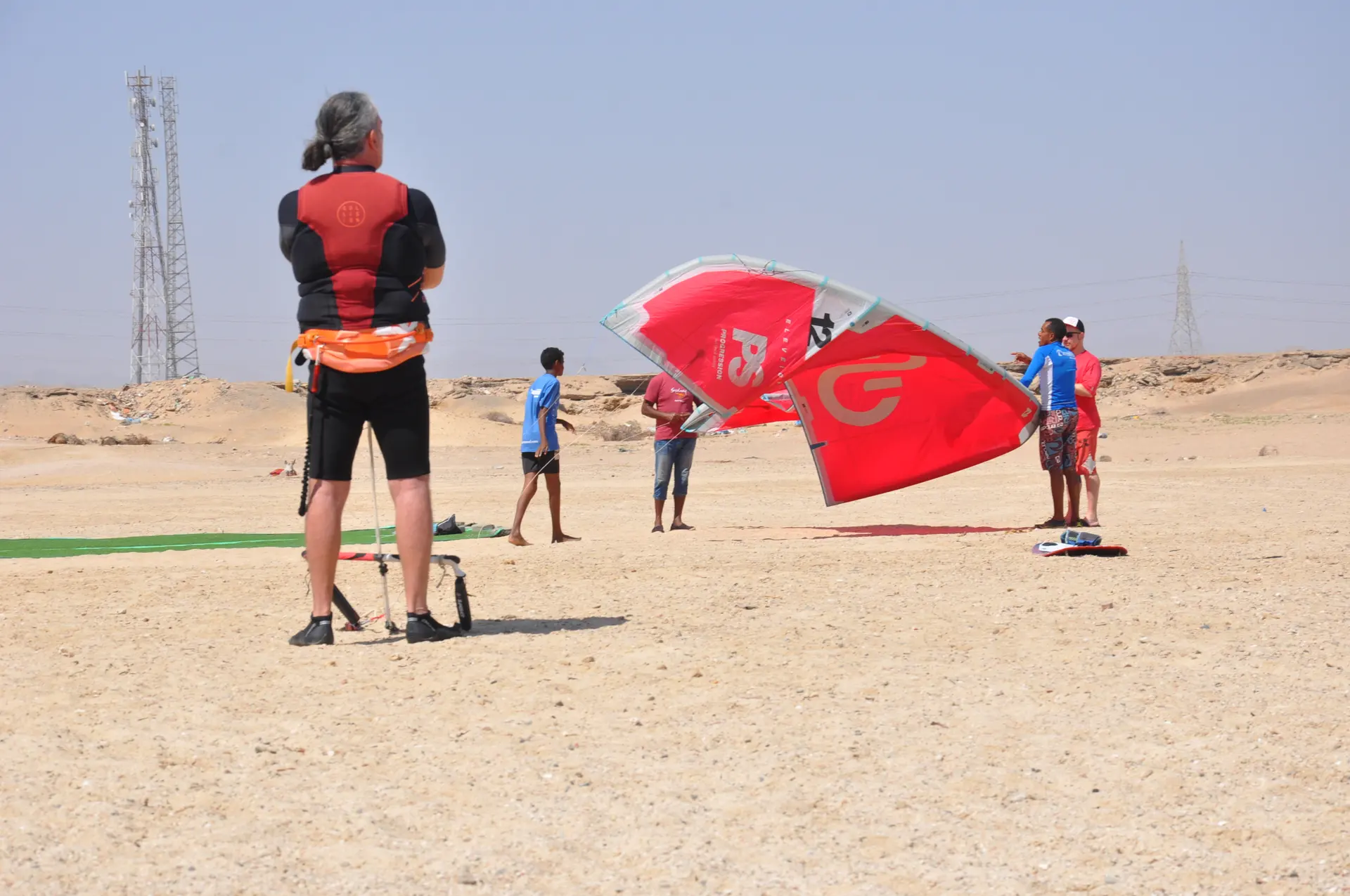
Save the school's location offline: the Google Maps plus code is WX78+MMJ, on Marsa Alam Road. The school says it is about one hour from Marsa Alam airport, with the transfer usually arranged through your accommodation; the Marsa Alam kitesurfing guide covers the journey. If you already ride, bring your IKO certification (the IKO Kiteboarder Card / vCard): riders without a card get a short assessment before they rent, and supervised rental needs IKO Level 2 including 2I.
Health basics
This is general travel sense, not medical advice. Keep any regular medication in your hand luggage, check the rules for carrying it with official sources, and add a few plasters for blisters and scrapes. For vaccinations or any health condition, ask your doctor or a travel-health service; UK travellers can start with the TravelHealthPro country pages. If you wear glasses or contact lenses, bring spares.
Bringing your own kite equipment
If you already ride, you can bring your own kit or rent at the school, which means no kite bag at all. Beach use and storage is the service for your own equipment: storage, kite inflating, washing your kite gear, launch and landing assistance, Wi-Fi and two rescues, charged per kiter.
A few things to settle before you fly:
- The airline. Airlines set their own allowances and fees for kite bags, so ask before you book rather than at check-in.
- The pump. Inflating is part of the school's service, so ask whether you need to bring one.
- Small kit. A repair kit and a hook knife for cutting tangled lines are normal in a kite bag.
- Safety checks. Manufacturers advise trying your quick release and checking your lines before each session, and rinsing safety systems with fresh water. The safety rules guide has the pre-launch checklist.
What to pack for a kitesurfing holiday: the checklist
Copy this and delete what does not apply.
Sun and heat
- Sunscreen (SPF 30 or higher, 4-star UVA) and a small bottle for the beach bag
- Lip balm with sun protection, wide-brimmed hat, wraparound sunglasses
- Long-sleeved UV top
- Refillable water bottle
On and near the water
- Two swimsuits or swim shorts, so one can dry
- Shoes for the lagoon (neoprene boots or secure water shoes)
- A quick-dry towel
- A warm layer and long trousers, especially from December to February
Electronics, documents and health
- Adapter for type C and F sockets, chargers, power bank, waterproof phone pouch, offline copies of tickets and confirmations
- Passport and any entry documents your nationality requires, checked at official sources
- Travel insurance that covers kitesurfing
- Your IKO certification, if you hold one
- Regular medication in your hand luggage, a few plasters, spare glasses or lenses if you wear them
Only if you bring your own kit
- Kites, bar and lines, board, harness, vest, helmet, repair kit and hook knife
- Airline confirmation for the kite bag
For non-kiters in your group
- Swimwear, a hat and sun protection; the services page lists the tandem, stand-up paddle board and glass kayak.


