
Best time to kitesurf in Marsa Alam: a month-by-month guide

The best time to kitesurf in Marsa Alam for the most consistent wind is June or September, with August close behind. In NASA model data for the area, those three months have the highest share of days with at least four daytime hours of useful wind, and November has the lowest. Beginners, light-wind riders and foilers can still have a good trip in other months, so the best month depends on what you want from it.
Two cautions first. The wind figures are model data averaged over a grid about 50 km wide, not measurements taken at the lagoon, so use them to compare months with each other, not to predict a particular day. And KiteMood's own description of the seasons differs from the model in places. This guide gives both and says which is which.
Read the numbers first
Where the wind figures come from
The figures come from NASA's POWER data set, which draws on a reanalysis (a weather model combined with observations) called MERRA-2. They cover daytime hours, 09:00 to 17:00 solar time, from 2015 to 2024, at 10 m above the surface, for the grid cell that contains the lagoon. NASA states that each value is an average over the whole cell, so local effects such as the sea breeze or the reef edge are likely to be smoothed out.
In this guide a useful-wind day is a day on which the model shows at least four daytime hours of wind between 12 and 28 knots (about 22 to 52 km/h). That is a rough yardstick for twintip kitesurfing, not a rule: foils and bigger kites work in lighter wind.
What the school says
KiteMood describes a very high chance of wind all year, mostly cross to cross-onshore. By its account, mid-May to June and September to mid-October have the highest wind probability, January to March and November to December bring stronger wind with a lower probability, and July and August are extremely hot with very steady wind. That is the school's own description, not measured data. The about page describes the lagoon.
Where the model differs
The model agrees on the peaks: June and September stand out. It differs in three ways.
- October. The school lists September to mid-October among its best weeks. The model shows 36% useful-wind days for October as a whole, against 68% for September. These are monthly figures, so they cannot show whether early October still resembles September.
- Winter. The model shows fewer useful-wind days than June or September and generally lower daytime averages, not stronger wind. A 2015 book chapter on air-sea interaction in the Red Sea describes prevailing north-westerly winds in the northern Red Sea, strongest in winter. That is a basin-wide satellite picture, not a Marsa Alam measurement, but it gives the school's winter description some support.
- Strong wind. The school lists "a high percentage of days with 20 knots or more" as its strong days. The model puts wind of 21 knots or more in at most 2% of daytime hours in any month. Days and hours are different measures, and a model averaged over a large area may flatten local peaks, but this data cannot show which is closer to the lagoon.
Month by month: the best time to kitesurf in Marsa Alam
The table sets the model's wind figures beside average temperatures. "Light hours" are the share of daytime hours below 8 knots. Temperatures are climate averages for Marsa Alam, so any given week can differ.
| Month | Useful-wind days (model) | Light hours, under 8 kn (model) | Air high / low (°C) | Sea (about °C) |
|---|---|---|---|---|
| January | 33% | 29% | 24.1 / 13.2 | 23 |
| February | 41% | 26% | 25.1 / 13.8 | 22 |
| March | 47% | 25% | 26.9 / 15.9 | 23 |
| April | 41% | 27% | 29.8 / 18.7 | 23 |
| May | 48% | 24% | 33.1 / 22.7 | 25 |
| June | 67% | 10% | 34.7 / 24.3 | 27 |
| July | 45% | 14% | 35.5 / 25.5 | 28 |
| August | 59% | 10% | 35.6 / 26.0 | 29 |
| September | 68% | 7% | 34.2 / 24.4 | 28 |
| October | 36% | 23% | 32.6 / 22.3 | 27 |
| November | 19% | 34% | 29.3 / 18.7 | 26 |
| December | 34% | 31% | 25.5 / 14.8 | 24 |
June, August and September: the most consistent
June has 67% useful-wind days and September 68%, with August at 59%. Only 7% to 10% of their daytime hours are light, and their mean daytime wind of 12.5 to 13.1 knots is the highest of the year. September has more than three times as many useful-wind days as November. The school agrees on June and September, and calls July and August very steady. The cost is heat: average highs run from 34.2°C in September to 35.6°C in August.
February to May and July: the middle of the table
February to May sit at 41% to 48% useful-wind days. Air highs climb from 25.1°C in February to 33.1°C in May, so March to May is the milder window with a middling chance of wind.
July is the odd one out. It has only 45% useful-wind days, yet just 14% of its daytime hours are light, because 44% fall in the 8 to 12 knot band. In the model, 86% of July's daytime hours reach 8 knots, but many of them sit on the gentle side. The school calls July "very steady"; the table cannot confirm that, because it does not measure steadiness.
October to January: the lighter months
October (36%), December (34%) and January (33%) are close together, and November is clearly the lowest at 19%. A third of November's daytime hours are light and its mean wind of 9.4 knots is the lowest of the year, so expect some quiet days. October is still hot, with an average high of 32.6°C, while December and January are mild at 24.1°C to 25.5°C.
Heat, sun and sea through the year
Average highs climb from 24.1°C in January to 35.6°C in August, and average lows from 13.2°C to 26.0°C. Averages are not limits: the records are 45°C (10 May 2010) and 5°C (3 January 2008). The sea runs from about 22°C in February to about 29°C in August. Rain is almost absent, about 5 mm in a whole year, so it is not a factor in any month.
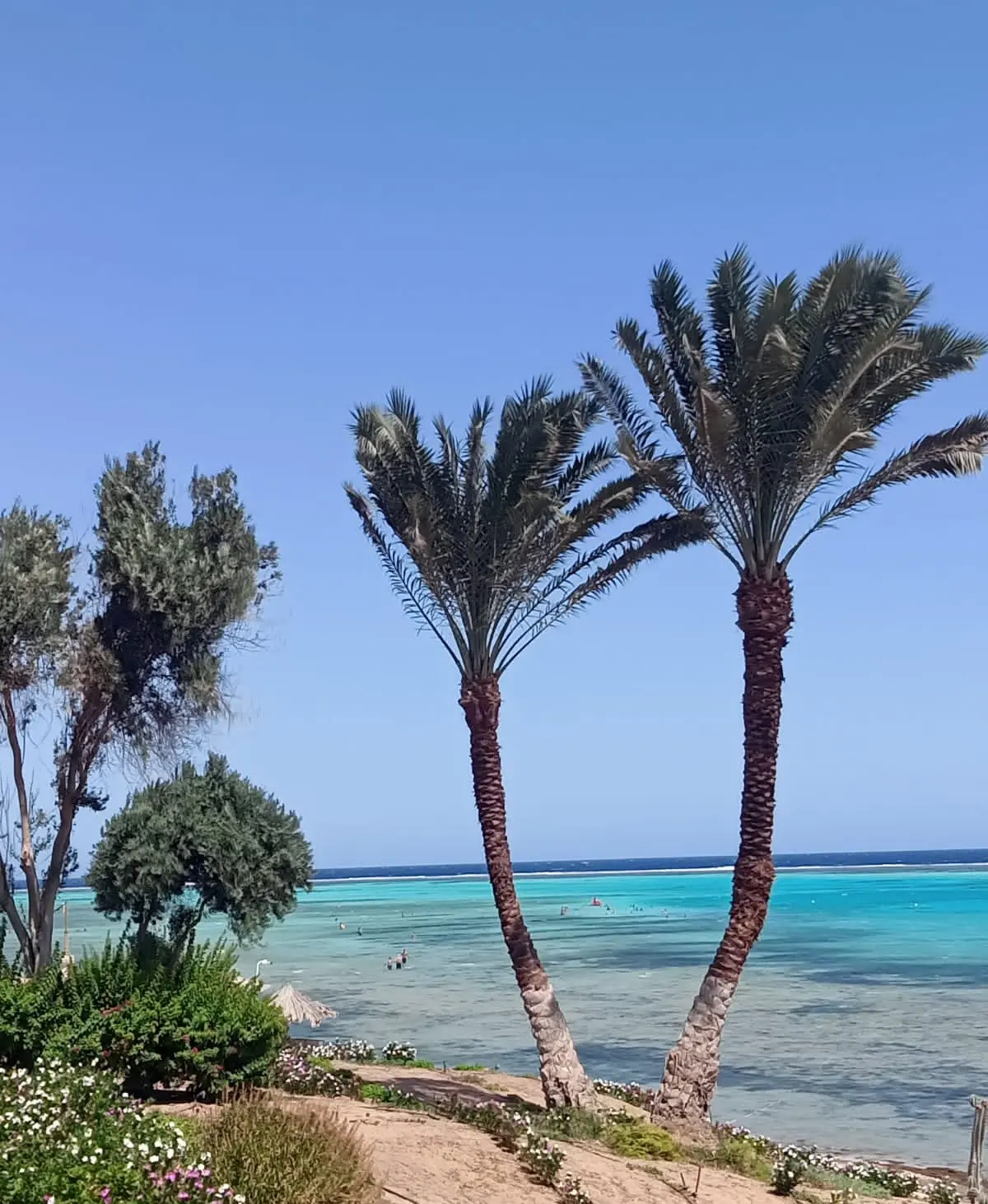
Sun. The maximum UV index runs from 5 in December to 11 or more between April and August. NHS advice is that water reflects UV and that its cooling effect can hide sunburn, so sun protection is a year-round job.
Wetsuit and evenings. KiteMood's advice is a long wetsuit all year, or a long suit or a shorty in summer. Wind chill, not only the sea temperature, is a sensible reason, because kitesurfing keeps you mostly out of the water and in the wind. Nights from December to February average about 13°C to 15°C, so bring a warm layer. The guide to what to pack for a kitesurfing holiday in Marsa Alam has the full list.
Which season suits which rider
Beginners
The school says beginners usually learn best when the wind is moderate and steady, and your instructor chooses the kite size, so you do not need to hit an exact wind speed. KiteMood reports a very high chance of wind all year, but the odds differ by month:
- June and September have the best odds in both sources.
- July and August are described as very steady but extremely hot, so plan around the heat.
- March to May are milder, with a middling chance of wind.
- November to January bring more light days. KiteMood's pages do not say what happens on a very light day, so ask before you book.
Whatever the month, ask how your lessons can be spread across your stay, so one quiet afternoon does not use up your programme. Level 1 – Discovery is the first step, and how long it takes to learn kitesurfing explains what to plan for.
Light-wind riders and foilers
Wing foiling needs less wind than kitesurfing. Published sources disagree on the minimum, with figures from roughly 8 knots upwards. The model shows how much that matters in the quieter months: in November about 66% of daytime hours reach 8 knots but only about 19% reach 12 knots, while in June, August and September 90% to 93% reach 8 knots.
On lighter days kiters reach for bigger kites. One manufacturer's guideline suggests twintip kites of 12 to 17 m² for 10 to 13 knots, depending on rider weight, and stresses that it is only a guideline. The kitesurfing wind guide covers kite size and gusts. KiteMood rents wing foil sets and has foiling courses, coaching and equipment on site: see foiling, or kitesurfing vs wing foiling for the comparison.
Strong-wind riders
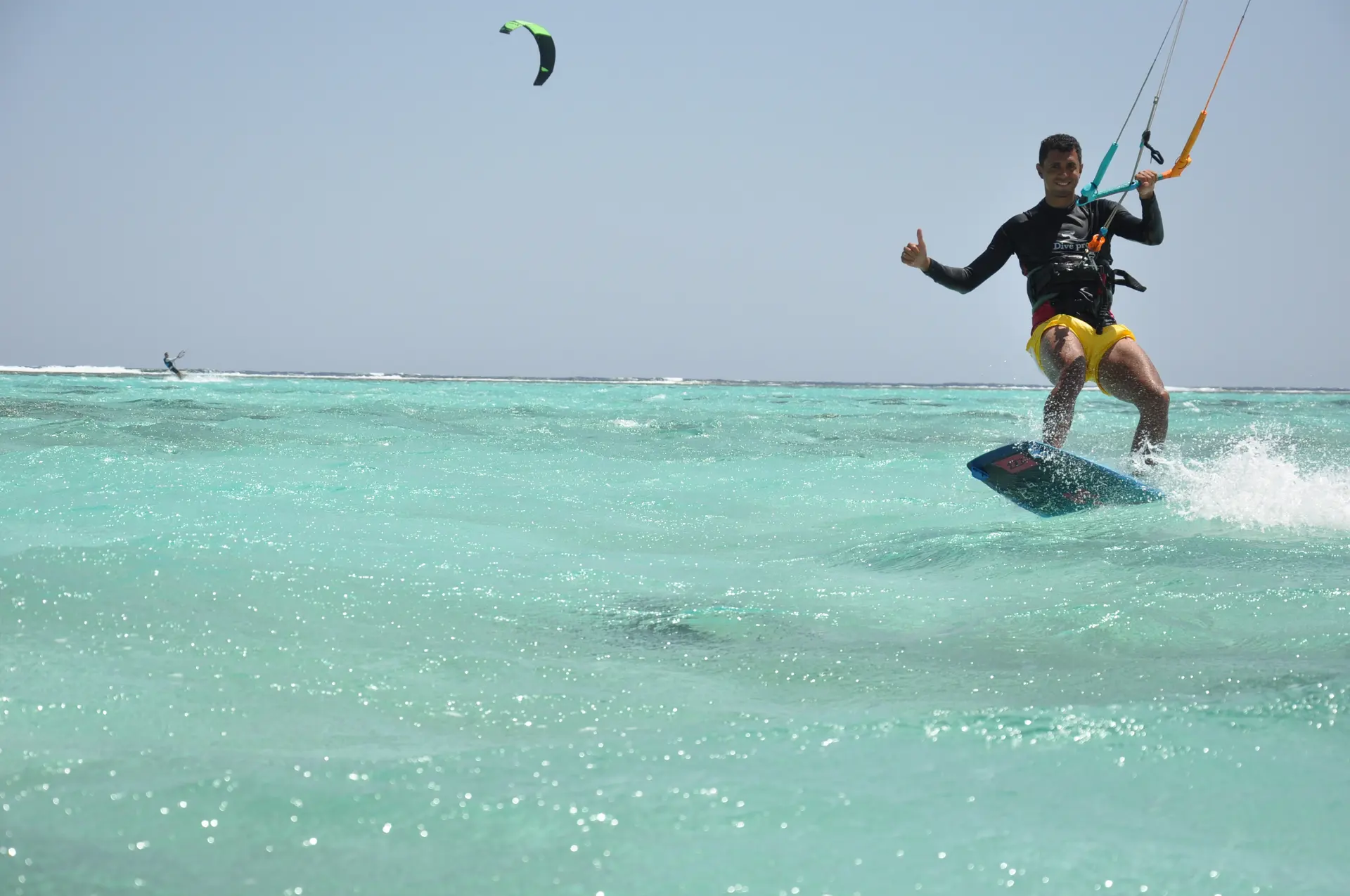
If you travel for strong wind, set your expectations by the sources. The model shows almost no hours at 21 knots or more in any month, while the school describes strong days and says winter brings stronger wind less often. Treat winter as a chance rather than a plan, and ask the team what they are seeing before you commit your dates.
How to check the real conditions
No monthly table can tell you what the wind will do on your day. Use it to choose your month, then narrow things down.
- Before you travel. The wind forecast page shows a live reading and the next 24 hours for the lagoon from Open-Meteo, a weather model. It can differ slightly from what you feel on the beach.
- Match the hour. The school says the wind usually starts around 10:00, gets stronger through the day, picks up around 14:00 and eases in the evening. Look at the hour you will be on the water, not the daily average.
- Read gusts as well as speed. A big gap between steady wind and gusts means the wind will feel less steady on the water.
- Ask the team. Message KiteMood on the contact page and the team will tell you what the wind is really doing at the lagoon.
- Keep some slack. Build a spare day or lesson slot into your plan. The table gives odds, not a forecast.
For the lagoon, getting there and what else to do nearby, read the guide to kitesurfing in Marsa Alam.


